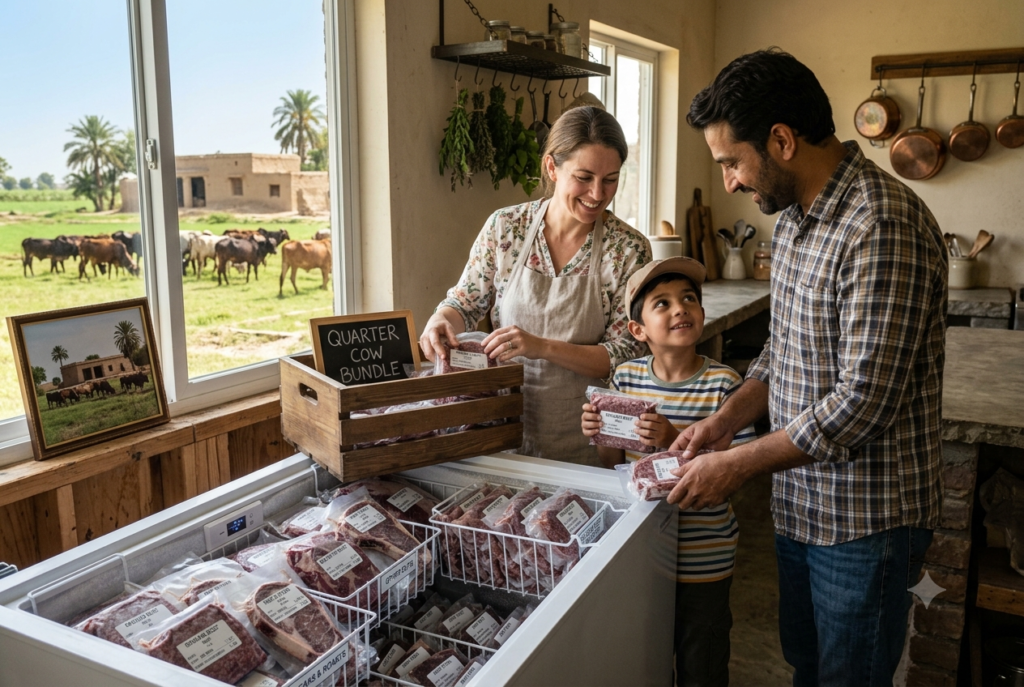
Buying meat in bulk has become increasingly popular among families who want to save money, enjoy higher-quality beef, and know exactly where their food comes from. One option many people consider is purchasing a quarter cow, also known as a beef quarter.
At first, the idea of buying hundreds of pounds of beef may seem overwhelming. You might wonder:
- Is buying a quarter cow actually cheaper?
- How much meat do you really get?
- Will it fit in your freezer?
- Is the quality better than grocery store beef?
- Is it worth the upfront cost?
The answer depends on your family size, eating habits, storage space, and priorities. For many households, buying a quarter cow can be a smart investment that provides high-quality meat for months. For others, it may not be the best choice.
This guide explains everything you need to know before buying a quarter cow, including costs, benefits, drawbacks, freezer requirements, and practical tips to help you decide.
What Is a Quarter Cow?
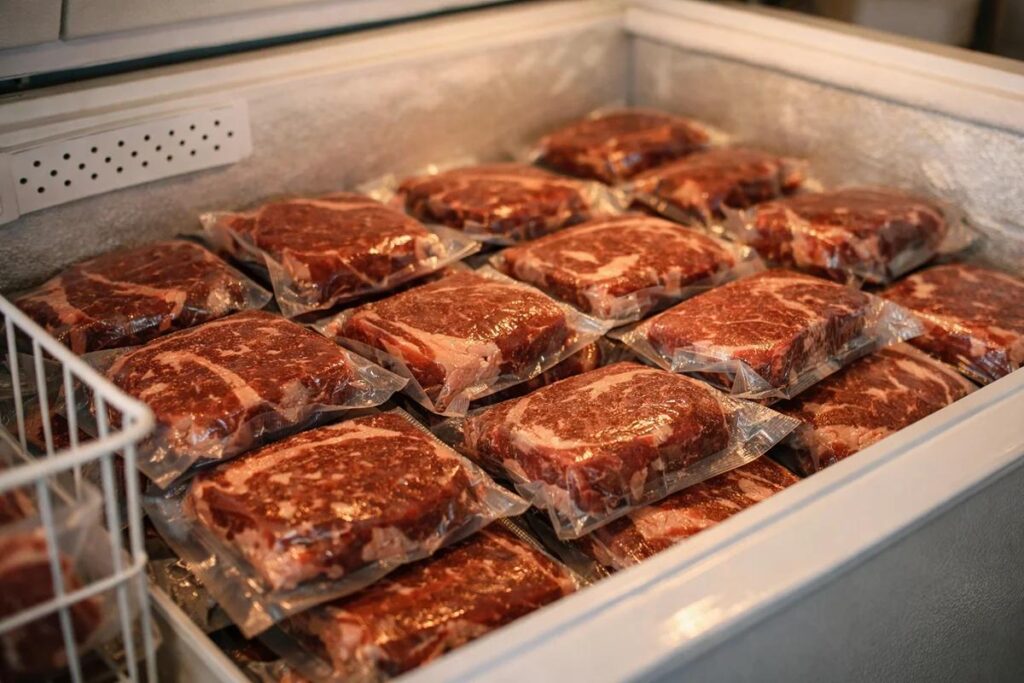
A quarter cow is exactly what it sounds like: one-fourth of a processed beef animal. When a whole cow is divided, it is typically separated into:
- Two front quarters
- Two back quarters
A quarter cow purchase usually includes a mixture of different cuts rather than only premium steaks.
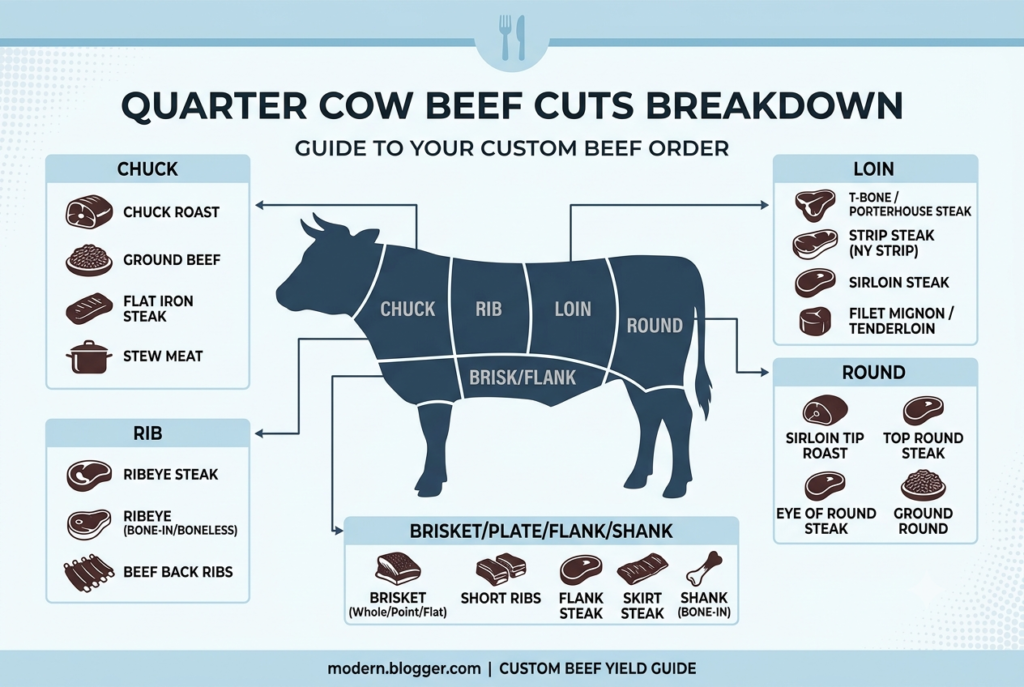
Depending on the farm or butcher, your order may include:
- Ribeye steaks
- Sirloin steaks
- Ground beef
- Roasts
- Stew meat
- Short ribs
- Brisket
- Steaks
- Soup bones
- Other specialty cuts
The exact amount and type of meat depends on the size of the animal and how you request your cuts.
How Much Meat Do You Get From a Quarter Cow?
One of the biggest questions buyers have is how much beef they will actually receive.
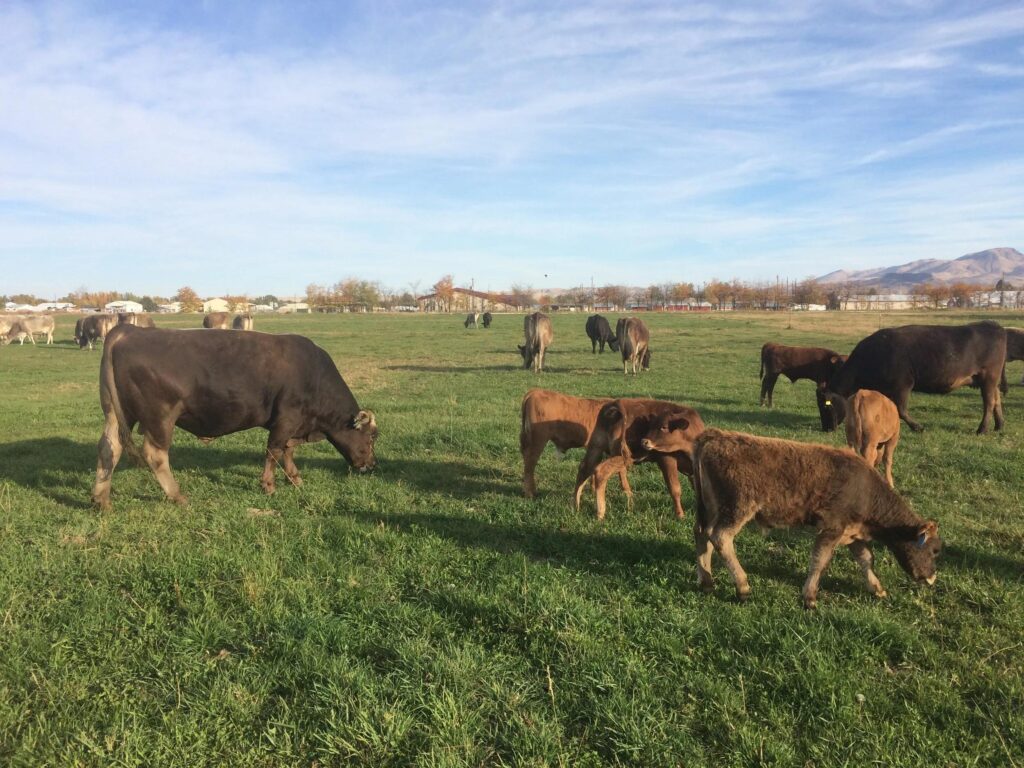
A typical quarter cow produces approximately:
- 100–180 pounds of packaged beef
- Around 350–450 pounds hanging weight before processing
The final amount depends on:
- Size of the cow
- Fat content
- Cutting instructions
- Bone-in or boneless choices
- Processing method
For example, a smaller animal may provide closer to 100 pounds of meat, while a larger animal may provide 180 pounds or more.
A quarter cow can provide enough beef for:
Small Family (1–2 people)
Approximately 6–12 months of beef.
Medium Family (3–5 people)
Approximately 4–8 months of beef.
Large Family
May last only a few months depending on how often beef is eaten.
How Much Does a Quarter Cow Cost?
The price of a quarter cow varies widely depending on location, farm practices, animal quality, and processing fees.
A typical price range is:
- Beef cost: $800–$1,500+
- Processing fees: $100–$300+
- Total estimated cost: $900–$1,800+
Several factors influence the final price:
Grass-Fed vs Grain-Finished Beef
Grass-fed beef is often more expensive because of:
- Longer raising periods
- Different feeding practices
- Smaller farm operations
Grain-finished beef may have:
- More marbling
- Traditional steakhouse flavor
- Lower cost in some areas
Farm Location
Local farms may charge different prices depending on:
- Land costs
- Feed prices
- Regional demand
Processing Choices
Extra services can increase your bill:
- Vacuum sealing
- Specialty sausage
- Extra steaks
- Custom packaging
Before buying, always ask:
- Is processing included?
- Are there additional fees?
- What cuts are included?
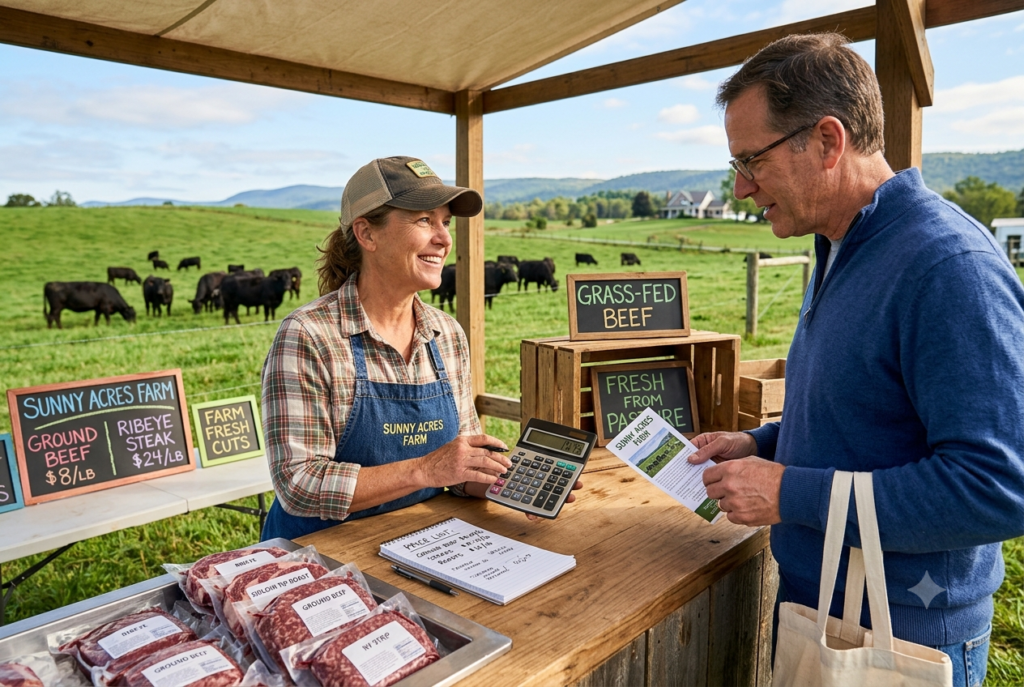
Is Buying a Quarter Cow Cheaper Than Buying Beef at the Store?
The biggest reason people consider buying a quarter cow is potential savings.
However, the savings are not always obvious because you pay a large amount upfront.
When comparing prices, consider the average cost per pound.
For example:
A quarter cow may cost $8–$12 per pound after processing.
Grocery store beef prices can range from:
- Cheap ground beef: lower cost per pound
- Premium steaks: much higher cost per pound
The advantage of buying bulk beef is that you receive a variety of cuts at one average price.
You may save money on expensive cuts like:
- Ribeye
- Sirloin
- Roast
- Steaks
But you may not save as much if your household mainly eats:
- Ground beef
- Cheap cuts
- Small quantities
The real value comes from getting premium-quality meat at a predictable price.
Benefits of Buying a Quarter Cow
Better Meat Quality
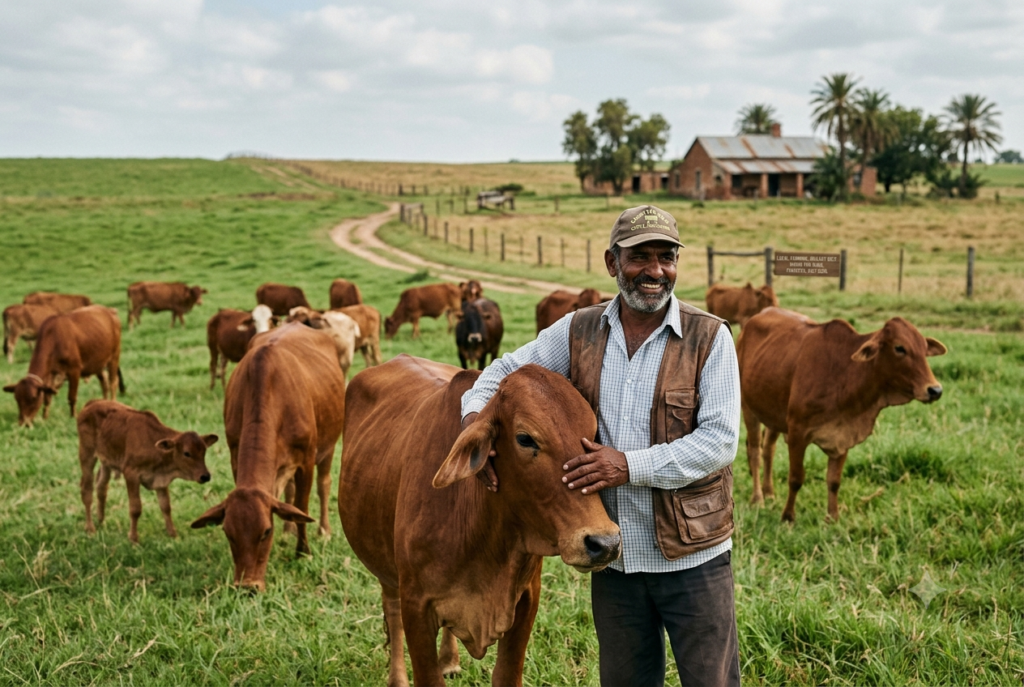
Many people buy directly from farms because they want better-quality beef.
Benefits may include:
- Knowing where your meat comes from
- Learning how animals are raised
- Supporting local farmers
- Fresher processing
Many small farms focus on quality rather than mass production.
Saves Money Over Time
Although the upfront cost is high, buying bulk can reduce your long-term grocery spending.
Instead of purchasing individual packages every week, you have a stocked freezer ready for meals.
This can help families who regularly cook:
- Burgers
- Steaks
- Tacos
- Chili
- Beef soups
- Roasts
Convenient Meal Planning
Having a freezer full of beef makes meal planning easier.
You always have options available without frequent grocery trips.
A quarter cow can provide:
- Quick weeknight meals
- Weekend roasts
- Family dinners
- BBQ options
Supports Local Farmers
Purchasing directly from farms allows your money to support local agriculture.
Many buyers appreciate:
- Transparency
- Ethical farming practices
- Building relationships with producers
Less Grocery Store Packaging
Buying bulk beef reduces repeated purchases of:
- Plastic trays
- Small packages
- Disposable wrapping
For environmentally conscious shoppers, this can be another advantage.
Downsides of Buying a Quarter Cow
While there are many benefits, buying bulk beef is not perfect for everyone.
Large Upfront Payment
The biggest challenge is paying hundreds or thousands of dollars at once.
Some families may prefer smaller weekly grocery expenses.
Requires Freezer Space
A quarter cow requires significant storage.
Most buyers need:
- Large chest freezer
- Extra freezer shelves
- Organized storage system
A regular refrigerator freezer usually cannot hold the entire order.
You Cannot Choose Only Favorite Cuts
A quarter cow includes many different cuts.
You cannot simply order:
- 50 pounds of steak
- No roasts
- No ground beef
You receive a balanced selection.
Less Flexibility
Once you buy the beef, you are committed to storing and using it.
This may not work well for:
- People who move frequently
- Small households
- People who rarely cook at home
How Much Freezer Space Do You Need?
Storage is one of the most important considerations.
A general guideline:
- 1 cubic foot of freezer space holds about 30–35 pounds of meat.
For a quarter cow, you may need:
- 5–7 cubic feet of freezer space
A chest freezer is usually the best option because it provides:
- More storage
- Better energy efficiency
- Longer freezing ability during power outages
Before purchasing, measure your freezer space first.
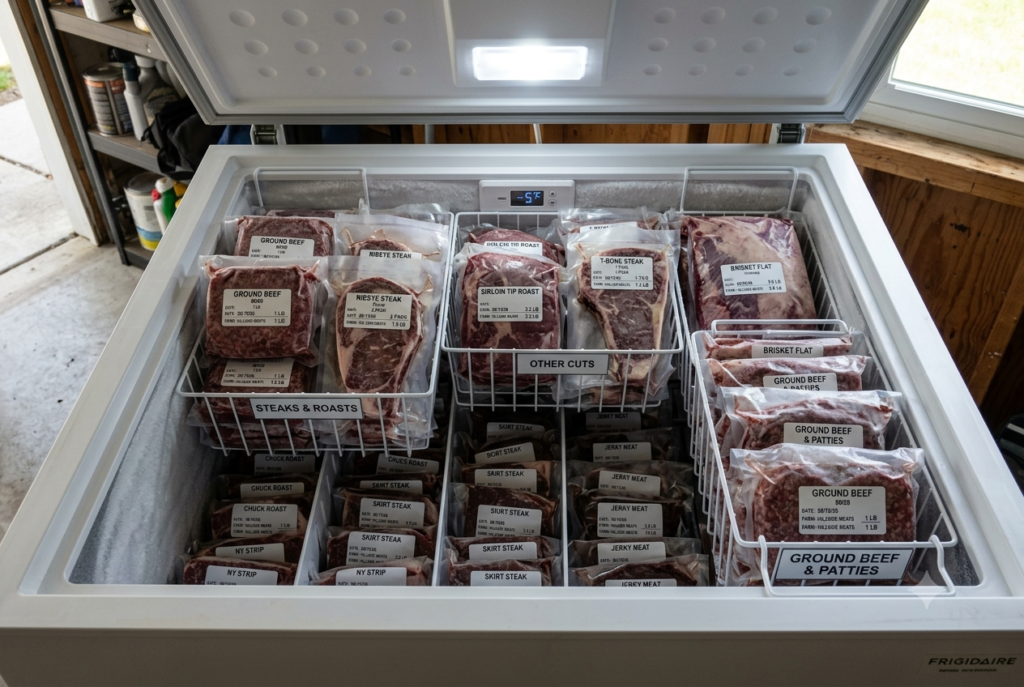
What Cuts Usually Come With a Quarter Cow?
Your exact order depends on your butcher instructions, but common cuts include:
Steaks
Popular steak cuts:
- Ribeye
- Sirloin
- T-bone
- Round steaks
Ground Beef
Many buyers receive a large amount of ground beef because it is versatile.
Perfect for:
- Burgers
- Meatballs
- Pasta sauces
- Tacos
Roasts
Common roasts include:
- Chuck roast
- Rump roast
- Arm roast
Other Cuts
You may also receive:
- Brisket
- Short ribs
- Soup bones
- Stew meat
Before ordering, ask the farm for a sample cut sheet.
Questions to Ask Before Buying a Quarter Cow
Before making a purchase, ask these questions:
About the Animal
- Is the beef grass-fed?
- Is it grain-finished?
- How old was the animal?
- Where was it raised?
About Pricing
- Is the price based on hanging weight?
- Is processing included?
- Are there additional fees?
About Processing
- Can I customize cuts?
- How is the meat packaged?
- When will it be ready?
About Pickup
- Where do I collect my order?
- How long can it stay frozen?
- Is delivery available?
Who Should Buy a Quarter Cow?
A quarter cow may be a great choice for:
Families that eat beef regularly
People with freezer space
Those who want local farm meat
Budget-conscious bulk shoppers
People who enjoy cooking at home
Who Should Avoid Buying a Quarter Cow?
It may not be ideal for:
Apartment residents without freezer space
People who rarely eat beef
Small households with limited storage
Anyone uncomfortable with large upfront costs
Tips to Get the Best Deal on a Quarter Cow
Compare Multiple Farms
Prices and quality vary.
Talk to several farmers before deciding.
Buy With Friends or Family
If a quarter cow feels like too much, split it with another household.
Choose Cuts Carefully
Think about what your family actually eats.
Label Everything
Organize your freezer with:
- Cut name
- Date purchased
- Quantity
Plan Meals Ahead
Bulk meat works best when you have a meal strategy.
Final Thoughts: Is Buying a Quarter Cow Worth It?
For many families, buying a quarter cow is worth it because it provides high-quality beef, long-term savings, and the convenience of having meat available at home.
However, it is not automatically the cheapest option for everyone.
The best candidates are people who:
- Eat beef frequently
- Have freezer space
- Prefer buying in bulk
- Value knowing where their food comes from
If you have the storage space and regularly purchase beef, a quarter cow can be a practical investment that saves money and improves the quality of your meals.
Before buying, calculate your expected cost per pound, compare local farms, and make sure the quantity matches your household needs.